(주)필텍이엔지

- |

Copyright © 2021 www.www.filtecheng.co.kr.
All Rights Reserved.
All Rights Reserved.
Zn-Al Flake Coating
Eco-friendly Zn-Al Flake coating without hydrogen embrittlement
Zn-Al Flake coating is an eco-friendly anti-corrosion coating that provides excellent corrosion resistance even with a thin film of approximately 10㎛.
Since it does not cause hydrogen embrittlement, it can be applied to high-strength bolts, bridges, and other parts exposed to heavy loads.
It helps maintain the original properties of the material while greatly extending product life.
- A phenomenon in which metal deteriorates from the surface due to chemical reactions with the surrounding environment.
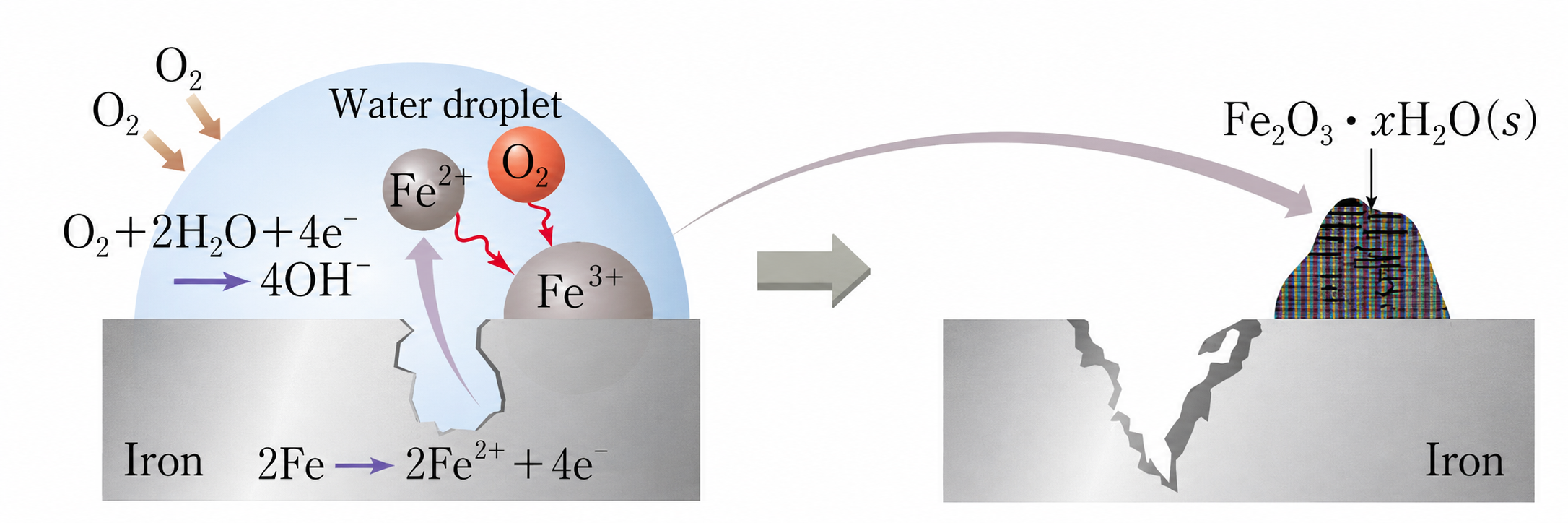
- A method of covering the metal surface with a chemically stable material to prevent contact with corrosive substances.

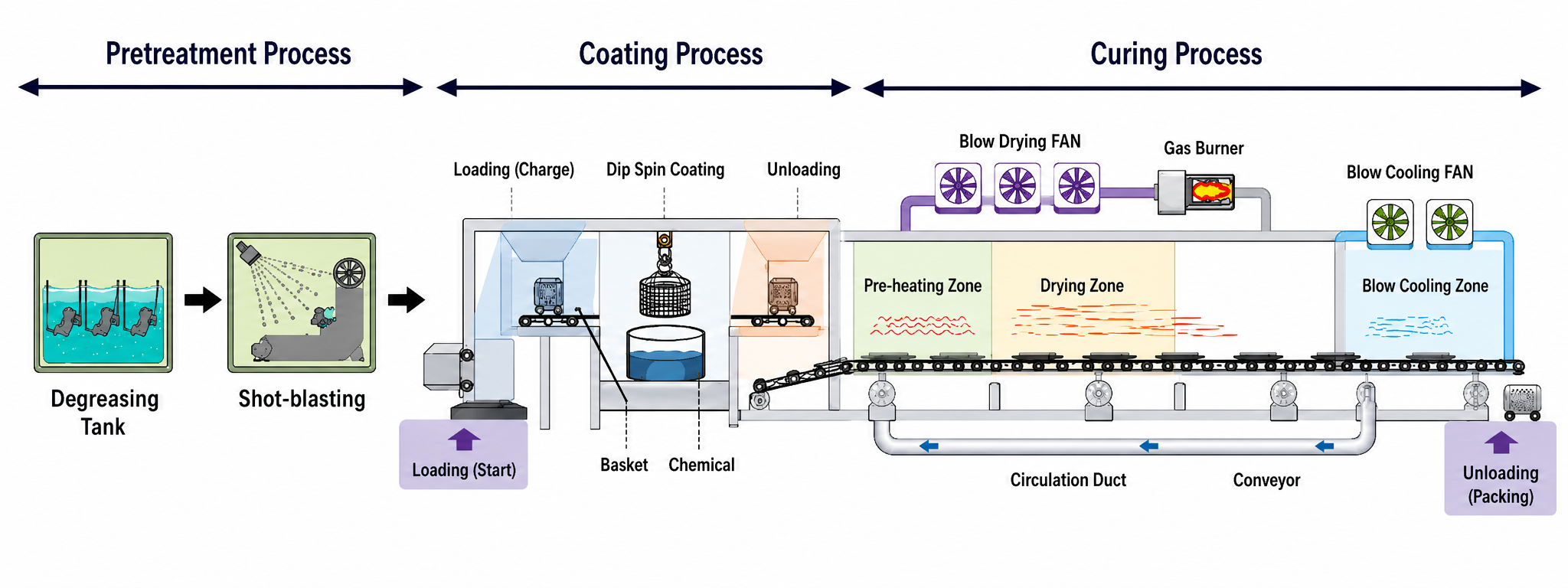
- Zn-Al Flake coating provides excellent corrosion resistance at a low film thickness of approximately 10㎛. It is an eco-friendly coating system that does not cause hydrogen embrittlement and does not contain harmful heavy metals.
It is widely applied in various industries, including automotive, construction, shipbuilding, and wind power.
Because it does not cause hydrogen embrittlement, it is suitable for high-strength bolts, bridges, and other critical parts exposed to heavy loads.
It maintains the original properties of the material while significantly extending product life with high corrosion resistance.
| Category | Zinc Plating + Chromate | Zinc-Nickel Plating + Chromate | Hot-dip Galvanizing | Zinc Flake Coating |
|---|---|---|---|---|
| Advantages | -Low processing cost -Excellent appearance |
-Better corrosion resistance than zinc plating -Chromate treatment (15㎛ : NSST 1000hrs.) -Excellent appearance |
-High coating layer hardness -Better corrosion resistance than zinc plating |
-Excellent corrosion resistance with thin-film coating (10㎛ : NSST 1000hrs.) -No hydrogen embrittlement -Simple process -No wastewater generation -Strong resistance to galvanic corrosion -No harmful heavy metals such as Cr and Ni -Excellent heat resistance -Excellent fastening performance after coating |
| Disadvantages | -Low corrosion resistance -Large amount of wastewater generated -Weak abrasion resistance -Possible hydrogen embrittlement -Complex process -Vulnerable to humidity |
-Chromate treatment is required to improve corrosion resistance -Large amount of wastewater generated -Risk of nickel ion release -Possible hydrogen embrittlement -Complex process -High processing cost |
-Poor appearance -High film thickness -Possible hydrogen embrittlement -Poor fastening performance -Difficult to reprocess -Severe white rust -Relatively low corrosion resistance (60㎛ 600hrs.) |
-High curing temperature, 300~340℃ -Lower surface hardness compared to Zn-Ni plating |
| Category | Solvent-based | Water-based |
|---|---|---|
| Concept | Solvent-based zinc flake coating using thinner | Water-based zinc flake coating |
| Features | -Uses thinner -High VOC emissions -Lower curing temperature than water-based products -Better coating properties than water-based products -Lower heat resistance -High fire risk |
-Low VOC emissions -Better corrosion resistance than solvent-based products -Excellent heat resistance -Less sensitive to humidity -Low fire risk |